
Thermal Comfort Analysis Services
🌡️ What is Thermal Comfort Analysis?
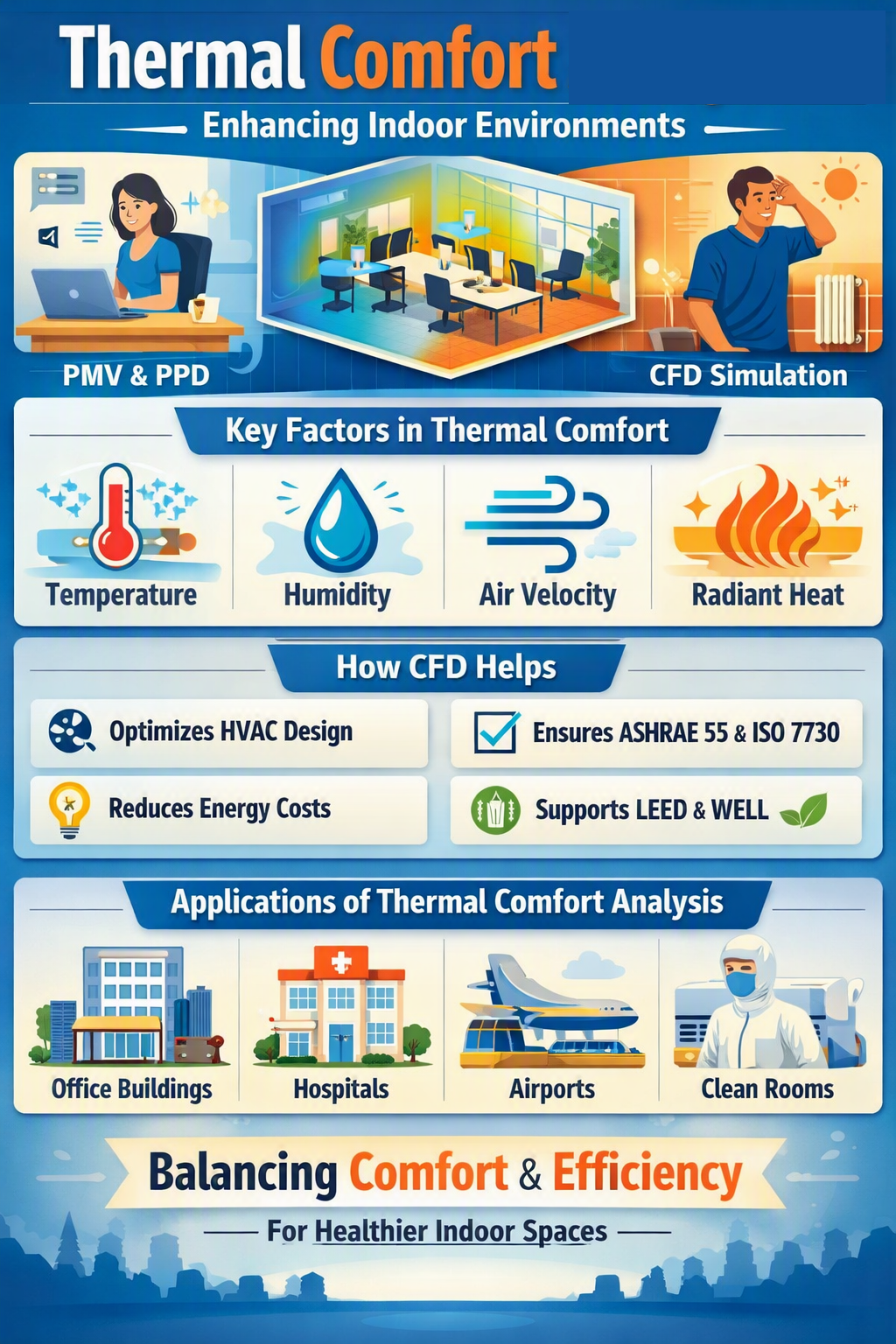
Thermal Comfort Analysis evaluates how temperature, humidity, air velocity, and radiant heat affect human comfort. Using Computational Fluid Dynamics (CFD), engineers simulate indoor conditions to predict PMV (Predicted Mean Vote) and PPD (Predicted Percentage of Dissatisfied) indices — global benchmarks for comfort assessment.
📊 Key Factors in Thermal Comfort
- Temperature: Maintaining optimal indoor ranges for productivity.
- Humidity: Preventing dryness or excess moisture discomfort.
- Air Velocity: Ensuring balanced airflow without drafts.
- Radiant Heat: Controlling heat from walls, floors, and ceilings.
⚙️ How CFD Enhances Comfort
CFD simulations visualize airflow, heat transfer, and humidity distribution. This helps architects and facility managers:
- Optimize HVAC design for energy efficiency.
- Validate compliance with ASHRAE 55 and ISO 7730.
- Reduce energy consumption while improving occupant satisfaction.
- Support certifications like LEED and WELL.
🏢 Applications of Thermal Comfort Analysis
- Office Buildings: Boost productivity with optimized HVAC zoning.
- Hospitals: Maintain precise comfort for sensitive environments.
- Airports: Enhance passenger experience with efficient ventilation.
- Clean Rooms: Ensure compliance with ISO cleanliness standards.
✅ Conclusion
Thermal Comfort Analysis services are vital for modern building design. With CFD simulations, SuperDesignTech helps clients achieve superior indoor environments that balance comfort, efficiency, and sustainability.
0 Comments
Be the first to share your thoughts on this article.
Leave a Comment