
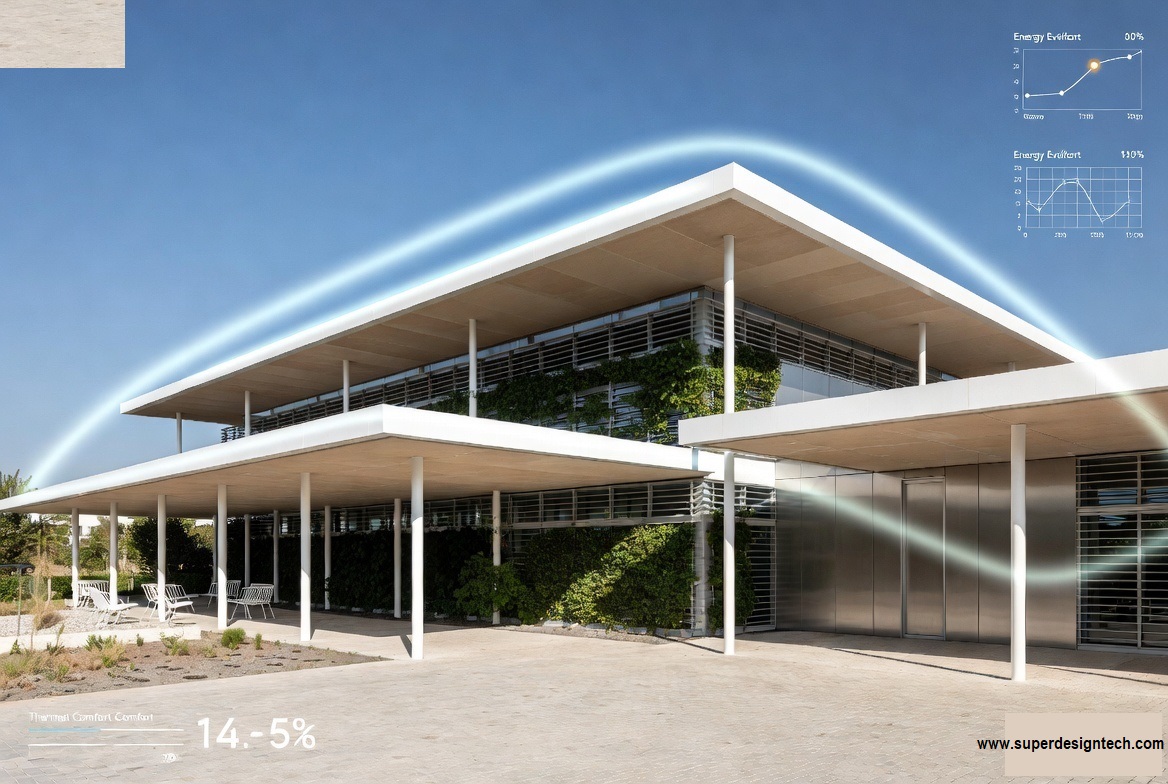
Thermal Harmony: Sustainable Office Thermal Comfort Analysis – Passive Design vs Occupant Satisfaction
By SuperDesign Tech Team | July 2026
In an era of rising temperatures and energy demands, how do sustainable buildings in India truly perform for their occupants? This in-depth thermal comfort analysis of SuperDesign Tech's flagship eco-office compares real-world environmental data with post-occupancy surveys, revealing powerful insights into passive strategies that deliver comfort while slashing energy use.
Introduction
With climate change intensifying extreme weather, achieving thermal comfort in buildings without heavy reliance on mechanical systems has become critical—especially in India's diverse and often harsh climates. SuperDesign Tech's new headquarters in a composite climate zone (inspired by real-world projects in Tamil Nadu and similar regions) was designed with passive strategies including high thermal mass, strategic shading, natural ventilation, and optimized orientation.
This study evaluates indoor environmental conditions from January to July, combining objective measurements (temperature, humidity, air velocity) with subjective Post-Occupancy Evaluation (POE) surveys over 42 days. Analysis follows ASHRAE 55 standards, using both Predicted Mean Vote (PMV) and Adaptive Comfort models to bridge the gap between engineered performance and human perception.
Methodology
- Environmental Monitoring: HOBO data loggers and sensors recorded indoor/outdoor temperature, relative humidity, and operative temperatures at multiple workstations.
- Occupant Surveys: Standardized thermal sensation votes (TSV), comfort scales, and adaptive behavior questions from 50+ employees.
- Standards Applied: ASHRAE 55 PMV/PPD and Adaptive Comfort Model, tailored for naturally ventilated/mixed-mode offices.
- Duration: Winter (Jan), Pre-Summer (Mar), and Peak Summer (May-July) periods.
Key passive features: Aerated concrete blocks for insulation, large shaded verandas, cross-ventilation corridors, and reflective roofing.
Key Findings
Seasonal Performance
- Winter (January): Excellent alignment—acceptable conditions >80% of the time per both PMV and Adaptive models. Occupants reported high satisfaction with minimal interventions needed.
- Pre-Summer (March): PMV indicated ~25-30% unacceptable periods; Adaptive model showed higher tolerance. Surveys revealed only ~10% dissatisfaction, highlighting occupant adaptation (clothing, fans, window operation).
- Summer (May-July): Challenging conditions with 75-85% unacceptable per objective models during peak hours. However, POE surveys showed ~50% acceptability thanks to behavioral adaptations and passive features. Active cooling supplements were recommended for peak periods.
Occupant vs Environmental Gap
Occupants demonstrated significant thermal adaptability, tolerating wider temperature ranges than PMV predicts. This underscores the value of the Adaptive Comfort model for naturally ventilated sustainable buildings in India.
Recommendations & Best Practices
- Enhance night purging and stack ventilation for summer performance.
- Integrate low-energy ceiling fans and radiant cooling panels in high-occupancy zones.
- Implement ongoing POE monitoring with smart sensors for dynamic adjustments.
- Design for mixed-mode operation to balance passive excellence with targeted active support.
- Promote occupant education on adaptive behaviors to maximize comfort and efficiency.
Conclusion
This analysis confirms that thoughtfully designed sustainable offices can achieve high levels of thermal comfort and occupant satisfaction while dramatically reducing energy consumption. By prioritizing passive strategies and validating them through rigorous POE, projects like SuperDesign Tech's headquarters set a benchmark for resilient, human-centric architecture in climate-vulnerable regions.
Future designs should continue bridging the gap between simulation, measurement, and lived experience.
0 Comments
Be the first to share your thoughts on this article.
Leave a Comment